The Value of Aluminum Foundry ahead of time Industrial Production Techniques
The Aluminum Foundry plays a pivotal duty in the evolution of industrial production strategies. Its lightweight properties and flexibility make Aluminum an optimal selection for numerous applications. Advanced casting techniques, consisting of die spreading and 3D printing, permit elaborate styles and automation. As the industry moves in the direction of automation and sustainability, inquiries arise about the future trajectory of Aluminum foundries and their effect on making performance. What difficulties and advancements exist in advance?
The Role of Aluminum in Modern Manufacturing
Aluminum plays an essential function in contemporary production due to its special buildings and convenience. As a lightweight metal, it notably decreases the overall weight of products, enhancing fuel performance in transport and aerospace markets. Its outstanding corrosion resistance warranties long life and reliability, making it ideal for numerous applications, from auto parts to constructing materials. Light weight aluminum's malleability enables it to be quickly formed into intricate designs, assisting in cutting-edge item advancement. Its conductivity makes it ideal for electric applications, adding to advancements in electronics and sustainable energy modern technologies. The versatility of Aluminum also prolongs to its recyclability, which adds to sustainable production methods. As industries remain to focus on efficiency and ecological responsibility, Aluminum continues to be an essential product, promoting technology and enhancing manufacturing procedures throughout multiple fields. Its duty is not just functional; it is fundamental to the evolution of modern-day industrial methods.
Key Benefits of Aluminum Casting
The benefits of Aluminum spreading are considerable, adding to its popularity in numerous commercial applications. One vital advantage is the lightweight nature of light weight aluminum, which minimizes transport costs and enhances fuel effectiveness in vehicle and aerospace markets. Furthermore, light weight aluminum's outstanding rust resistance expands the lifespan of actors components, making them optimal for marine and outside environments.
On top of that, Aluminum spreading allows for complicated geometries and elaborate layouts, providing suppliers with higher flexibility in item development - Aluminum Castings. The material additionally displays great thermal and electrical conductivity, making it ideal for a series of digital applications
Another advantage is the rapid solidification process, which brings about finer microstructures and boosted mechanical residential or commercial properties. Additionally, Aluminum can be reused repetitively without losing its integral top qualities, advertising sustainability in making techniques. These benefits highlight Aluminum spreading's crucial duty in advancing commercial manufacturing strategies while meeting diverse engineering needs.
Cutting-edge Casting Strategies and Technologies
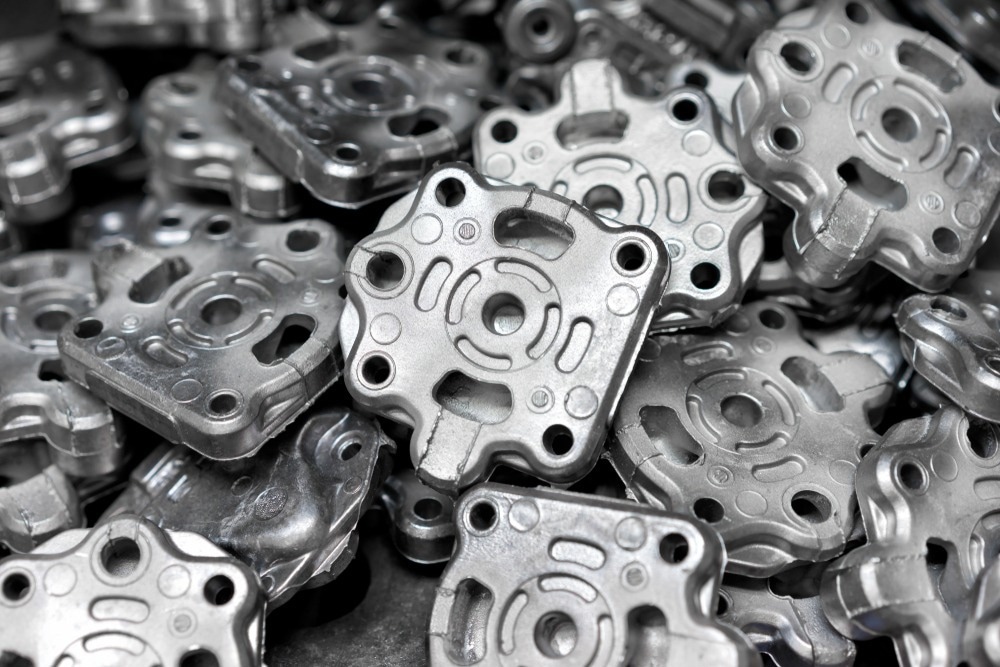
Many cutting-edge casting methods and innovations have emerged to improve the effectiveness and quality of Aluminum manufacturing. Amongst these, die spreading sticks out as an approach that enables for high-volume production of complex forms with outstanding dimensional accuracy. This strategy utilizes high stress to inject liquified Aluminum into a mold, leading to smooth surface areas and lowered demand for machining.
Another significant innovation is the usage of 3D printing for molds, which allows fast prototyping and lowers lead times considerably. This innovation enables intricate styles that standard approaches may battle to achieve.
Additionally, financial investment casting remains to progress, utilizing advanced products and procedures to develop accuracy elements. The fostering of computer simulations in the casting procedure has additionally boosted results by optimizing and anticipating possible defects mold layouts. Together, these innovations are transforming Aluminum shops, leading the way for more efficient production and premium product high quality in various markets.
Environmental Effect and Sustainability in Aluminum Foundries
As markets significantly focus on sustainability, the environmental effect of Aluminum factories has come under analysis. These facilities are considerable factors to greenhouse gas emissions and energy usage, primarily as a result of the energy-intensive processes associated with melting and casting light weight aluminum. The removal of bauxite, the primary ore, additional exacerbates ecological concerns, leading to habitat destruction and pollution.
In feedback to these challenges, several Aluminum shops are taking on much more lasting methods (Metal Castings). Developments such as recycling scrap Aluminum considerably minimize energy use and discharges, as reusing requires just a fraction of the energy needed for primary manufacturing. In addition, the assimilation of sustainable energy sources, such as solar and wind power, is gaining grip in factories aiming to lower their carbon impact
In addition, innovations in innovations that reduce waste and boost source performance are becoming important for the future of the Aluminum industry. These initiatives highlight the shift in the direction of a much more sustainable and eco accountable method in Aluminum shops.
Applications of Aluminum Spreading Across Industries
Aluminum spreading finds extensive application across diverse markets, owing to its desirable homes such as light-weight, corrosion resistance, and outstanding machinability. In the vehicle industry, suppliers utilize Aluminum spreadings for engine parts, transmission housings, and structural components, boosting gas performance and efficiency. The aerospace sector gain from light weight aluminum's strength-to-weight proportion, utilizing it in airplane frames and components, which add to minimized overall weight and improved fuel economic situation.
The consumer electronic devices field uses Aluminum my explanation spreadings for housings and chassis, incorporating aesthetic allure with resilience. In building and construction, Aluminum castings are utilized for window frames, doors, and building aspects, giving both capability and design versatility. Additionally, the aquatic market uses Aluminum casting for boat hulls and fittings, making certain resistance to deep sea deterioration. This convenience throughout various areas underscores Aluminum spreading's crucial function in contemporary commercial applications, driving technology and effectiveness.
Difficulties Faced by Aluminum Foundries
Aluminum factories run into considerable obstacles in meeting rigid ecological laws while preserving functional effectiveness. In addition, a scarcity of competent labor worsens these problems, hindering efficiency and technology. Resolving these concerns is essential for the sustainability and growth of the Aluminum casting market.
Environmental Laws Compliance
Aluminum foundries play an important function in industrial production, they typically encounter substantial difficulties in conforming with ecological laws. These policies are created to reduce air and water contamination, waste generation, and energy usage. Foundries typically should purchase advanced innovations to satisfy rigorous emission criteria and take care of harmful materials properly. The expenses connected with these upgrades can stress monetary resources, especially for smaller sized procedures. Additionally, the complexity of traversing regulative frameworks can lead to compliance errors, resulting in costly fines. Continual modifications in guidelines require factories to adapt quickly, frequently requiring continuous training and updates in operational practices. Stabilizing governing conformity with production performance continues to be an essential problem for the Aluminum Foundry sector.
Competent Labor Lack
As the Aluminum Foundry market remains to develop, a pressing difficulty has actually emerged: an experienced labor shortage that endangers the field's productivity and growth. This shortage is largely fueled by an aging labor force and the lack of rate of interest amongst more youthful generations in going after professions in production. Many proficient work call for specific training and experience, which are significantly hard to find. As a result, Aluminum factories struggle to preserve functional effectiveness, resulting in hold-ups and enhanced manufacturing prices. Efforts to attract brand-new ability with instruction programs and collaborations with universities are underway, yet these efforts require time to generate results. Without a durable increase of skilled employees, the Aluminum Foundry market may deal with significant difficulties in meeting the demands of modern commercial production.
Future Patterns in Aluminum Foundry Production Techniques
The future of Aluminum Foundry production techniques is positioned to be significantly shaped by advancements in automation and lasting product developments. Automation is expected to improve efficiency and accuracy in Foundry procedures, lowering labor expenses and decreasing human error (Aluminum Foundry). On the other hand, a growing focus on sustainability will drive the growth of environmentally friendly materials and methods, lining up the industry with international environmental objectives
Automation in Foundry Processes

Lasting Product Innovations
While the Aluminum Foundry market accepts automation, an identical concentrate on lasting product advancements is reshaping production strategies for the future. Advancements in recycling procedures are allowing foundries to make use of post-consumer light weight aluminum, considerably lowering energy usage and waste. Moreover, the development of environmentally friendly ingredients and finishings is decreasing the environmental influence related to standard materials. Technologies in lightweight Aluminum alloys are boosting efficiency while advertising sustainability, making items not only extra reliable but additionally less complicated to reuse at the end of their life cycle. As the market adapts to more stringent environmental guidelines, these sustainable techniques are coming to be essential. Ultimately, the dedication to lasting material innovations in Aluminum shops will drive improved productivity while dealing with global ecological difficulties.
Often Asked Concerns
Just How Does Aluminum Contrast to Various Other Steels in Casting?
Aluminum offers advantages over other steels in spreading, consisting of lower melting factors, excellent fluidness, and resistance to deterioration. These residential properties allow complex designs and faster production, making Aluminum Find Out More a favored selection for lots of markets.
What Precaution Are in Location in Aluminum Foundries?
Security steps in Aluminum foundries include protective gear for employees, proper ventilation systems, normal devices maintenance, fire prevention protocols, and rigorous adherence to security guidelines, guaranteeing a safe setting while decreasing the danger of crashes and injuries.
Exactly How Are Aluminum Alloys Selected for Specific Applications?
Aluminum alloys are chosen based upon mechanical properties, corrosion resistance, and thermal conductivity. Engineers examine application requirements, considering variables like weight, strength, and ecological conditions, guaranteeing suitable efficiency for specific industrial or industrial usages.
What Is the Typical Life Expectancy of Aluminum Cast Products?
The ordinary life expectancy of Aluminum cast items usually varies from 20 to 50 years, depending on ecological factors, usage problems, and upkeep techniques. Proper treatment can considerably expand their useful long life and performance efficiency.
Are There Accreditations for Aluminum Foundry Processes?
Yes, there are qualifications for Aluminum Foundry processes, consisting of ISO 9001 for top quality management systems and particular sector requirements like ASTM and SAE, which assure adherence to top quality and safety and security in Aluminum manufacturing and casting.
Aluminum factories play an important duty in commercial manufacturing, they frequently encounter substantial challenges in conforming with ecological policies. Aluminum shops battle to maintain functional effectiveness, leading to delays and enhanced manufacturing expenses. The future of Aluminum Foundry production techniques is positioned to be considerably shaped by developments in automation and sustainable product innovations. Significantly, automation is shaping the landscape of Aluminum Foundry manufacturing methods, driving efficiency and accuracy. While the Aluminum Foundry industry embraces automation, a parallel focus on sustainable material developments is improving production techniques for the future.
Comments on “Sustainability practices in modern Aluminum Foundries for eco-friendly manufacturing”